

Does Red Light Therapy Help Rosacea? What To Expect?


Last Updated on April 23, 2026
Persistent redness can feel unpredictable. One day your skin is calm, the next it burns, flushes, and reacts to the smallest trigger. This is the reality many people face with rosacea, especially when trying to find something that actually helps without irritation.
In the world of wellness and recovery, gentle, non-invasive options are gaining attention. One of those is red light therapy. But does red light therapy help rosacea, or is it just another trend?
I’ll walk you through what this therapy does, how it interacts with sensitive skin, and whether it can realistically support rosacea management—based on both clinical understanding and real-world patterns.
What Is Rosacea And Why Does It Cause Persistent Redness?
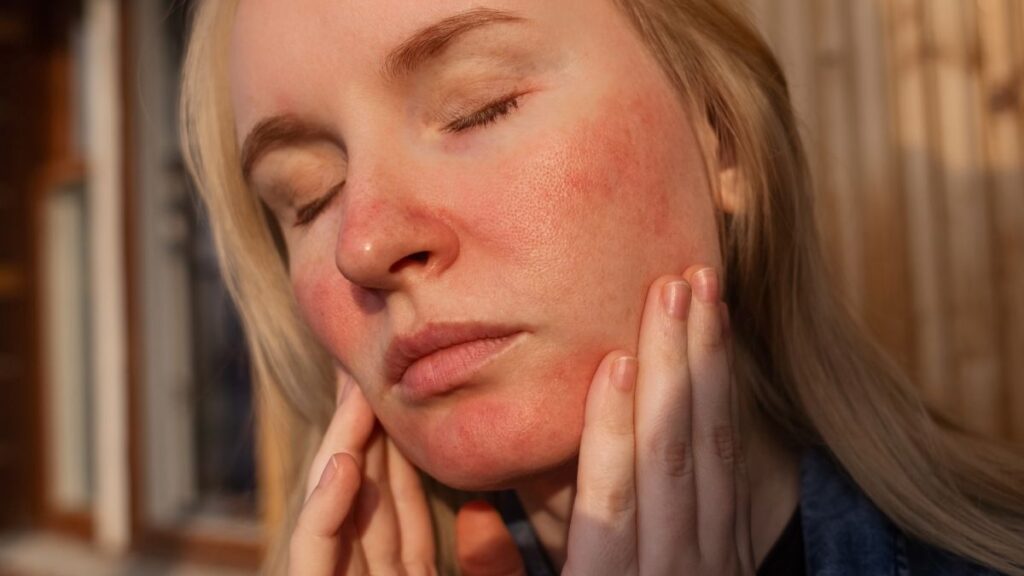
Rosacea is more than surface redness. This section explains what defines the condition, what triggers flare-ups, and what’s happening beneath your skin when symptoms appear.
Key Symptoms That Define Rosacea
It often starts subtly. A bit of flushing that lingers longer than expected. Over time, it becomes more consistent and visible.
Rosacea symptoms typically include:
- Persistent facial redness across cheeks and nose
- Visible small blood vessels
- Burning or stinging sensations
- Occasional bumps or irritation
What stands out is sensitivity. Your skin reacts faster and more intensely than usual. Even gentle products can sometimes feel uncomfortable.
Why does this matter? Because treatments must support the skin—not overwhelm it.
Common Triggers That Lead To Flare-Ups
Flare-ups rarely happen without a reason. The skin becomes reactive to everyday factors that wouldn’t normally cause irritation.
Common triggers include:
- Heat exposure or sudden temperature changes
- Spicy foods or hot beverages
- Emotional stress
- Harsh skincare ingredients
Many people notice patterns over time. A warm shower, a stressful day, or a new product can all lead to redness.
Recognizing triggers helps you reduce flare-ups before they escalate.
What Happens Beneath The Skin Surface

It’s not just redness. The deeper issue involves inflammation and vascular sensitivity.
In rosacea:
- Blood vessels dilate more easily
- The skin barrier becomes weaker
- Inflammatory signals stay active longer
This creates a cycle. The skin reacts quickly but takes longer to calm down.
From a clinical perspective, supporting the skin barrier and reducing inflammation is key. That’s where therapies like red light may play a role.
How Does Red Light Therapy Work On Inflamed Skin?
This section explains how red light therapy interacts with the skin, especially when inflammation and sensitivity are present.
The Role Of Light Wavelengths In Skin Healing
It’s about depth. Red light therapy typically uses wavelengths between 630–660 nm, which penetrate the upper layers of the skin.
These wavelengths reach cells responsible for repair without causing surface damage.
This matters because rosacea-prone skin doesn’t tolerate aggressive treatments well. Gentle penetration allows support without triggering irritation.
How It Supports Cellular Repair And Reduces Inflammation
At the cellular level, photobiomodulation helps improve how your skin cells function.
It works by:
- Supporting mitochondrial activity (cell energy production)
- Reducing inflammatory signals
- Encouraging tissue repair
Red light therapy may calm inflammation by improving cellular energy and reducing stress signals in the skin, which can help lower redness over time.
This is why it’s often described as supportive rather than corrective.
Why It Is Considered Gentle For Sensitive Skin
No heat. No damage. That’s what makes it different.
Unlike some treatments, LED light therapy:
- Does not burn or ablate the skin
- Does not disrupt the outer barrier
- Feels mildly warm but not irritating
Most people describe it as calming rather than stimulating.
Still, sensitivity varies. Even gentle treatments should be introduced gradually when rosacea is involved.
Does Red Light Therapy Help Rosacea Symptoms Over Time?

This section focuses on results—what changes you may notice, how long it takes, and who tends to benefit most.
Effects On Facial Redness And Flushing
This is the main concern. And the most common question.
Over time, red light therapy may:
- Reduce baseline redness
- Decrease frequency of flushing episodes
- Improve overall skin tone balance
Yes, it may help reduce redness by calming inflammation, but results are gradual and depend on consistency and skin sensitivity.
It’s not immediate. Changes tend to appear slowly over weeks.
Changes In Skin Sensitivity And Irritation
Some of the most meaningful improvements are subtle.
People often report:
- Less stinging after skincare
- Reduced tightness or discomfort
- More tolerance to environmental triggers
This suggests improved skin barrier function, which plays a major role in rosacea.
Calmer skin doesn’t just look better—it feels more stable day to day.
Impact On Visible Blood Vessels
This is where expectations matter.
Red light therapy may:
- Slightly reduce the appearance of mild vascular redness
- Improve overall tone around visible vessels
But it does not remove broken capillaries.
For more pronounced vessels, treatments like laser therapy are usually more effective.
Relief For Burning And Stinging Sensations
This is often overlooked but deeply important.
When inflammation decreases, many people experience:
- Less burning during flare-ups
- Reduced post-trigger discomfort
This improves daily comfort, even if redness doesn’t fully disappear.
And for many, that’s a meaningful shift.
How Long It Typically Takes To Notice Changes
Consistency matters more than intensity.
Most people begin to notice:
- Subtle calming effects within 2–4 weeks
- More visible improvement after 6–8 weeks
Expect gradual improvement over 4–8 weeks with regular use, typically 3–5 sessions per week.
Skipping sessions often delays progress.
Who May See Better Results Than Others
Not all rosacea responds the same way.
Better outcomes are often seen in:
- Mild to moderate redness
- Early-stage rosacea
- Individuals with consistent routines
Severe or advanced cases may require medical treatments alongside light therapy.
When Results May Be Limited Or Unclear
Sometimes, results plateau.
This can happen when:
- Triggers are still active
- Skin is highly reactive
- Expectations are too high
In these cases, red light therapy may still support comfort, but not significantly change appearance.
How To Use Red Light Therapy Safely For Rosacea-Prone Skin
This section focuses on practical use—how to introduce and maintain therapy without triggering irritation.
Choosing The Right Device For Sensitive Skin
Not all devices are equal.
Look for:
- Verified wavelength range (630–660 nm)
- Low to moderate intensity
- FDA-cleared or clinically tested devices
Avoid overly strong settings. Gentle exposure is more appropriate for rosacea-prone skin.
Starting With Low Frequency And Short Sessions
Start slow. Always.
Begin with:
- 2–3 sessions per week
- 5–10 minutes per session
Observe how your skin responds before increasing frequency.
Why does this matter? Because reactive skin needs time to adjust.
Keeping Skin Clean And Product-Free Before Use
Less is better here.
Before each session:
- Cleanse with a gentle, non-irritating product
- Avoid applying active ingredients beforehand
This reduces the risk of sensitivity during exposure.
Avoiding Overuse That Can Trigger Irritation
More is not better.
Overuse can lead to:
- Increased sensitivity
- Temporary redness
- Skin fatigue
Stick to a consistent schedule rather than increasing duration too quickly.
Monitoring Skin Response After Each Session
Pay attention. Your skin gives feedback.
Watch for:
- Increased redness lasting beyond a few hours
- Tingling or discomfort
- Improvement in calmness over time
Adjust frequency based on response.
Combining With A Gentle Skincare Routine
Support matters.
Use:
- Barrier-repair moisturizers
- Fragrance-free cleansers
- Minimal active ingredients
This enhances the effects of red light therapy without overwhelming the skin.
When To Stop Or Adjust Treatment
Stop if you notice:
- Persistent irritation
- Worsening redness
- Increased sensitivity
Then reassess. Sometimes reducing frequency is enough.
Consulting A Dermatology Professional If Needed
For moderate to severe rosacea, combining approaches works best.
A professional can help:
- Confirm diagnosis
- Suggest complementary treatments
- Monitor progress safely
Differences Between At-Home And Clinical Treatments
At-home devices:
- Lower intensity
- Safer for regular use
- Slower results
Clinical treatments:
- Higher intensity
- Faster outcomes
- Require supervision
Both can be useful depending on your needs.
Comparing LED Therapy With Laser Treatments
They serve different purposes.
LED therapy:
- Calms inflammation
- Supports skin function
Laser therapy:
- Targets visible blood vessels
- Provides more dramatic changes
- Choosing depends on your primary concern.
Understanding Possible Side Effects Or Risks
Generally minimal, but possible.
Side effects may include:
- Temporary redness
- Mild irritation
- Sensitivity if overused
Serious reactions are rare when used correctly.
Building A Consistent Routine Without Overloading Skin
Consistency wins.
A balanced routine:
- Regular sessions (3–4 times weekly)
- Gentle skincare
- Trigger awareness
This approach supports long-term skin stability.
Frequently Asked Questions About Red Light Therapy And Rosacea
Can Red Light Therapy Make Rosacea Worse?
In most cases, no. But overuse or high intensity can trigger temporary irritation. Starting slowly and monitoring your skin reduces this risk significantly.
Is It Safe For Daily Use On Sensitive Skin?
Daily use may be too much for some. Most people do better with 3–5 sessions weekly. Skin response should guide frequency.
Does It Help With Flushing Triggers?
It may reduce how strongly your skin reacts over time, but it doesn’t remove triggers themselves. Lifestyle awareness still matters.
Can You Combine It With Topical Treatments?
Yes, but keep routines simple. Avoid using strong actives right before sessions to prevent irritation.
Is Professional Treatment More Effective Than Home Devices?
Clinical treatments are stronger and may produce faster results. At-home devices are safer for ongoing use and maintenance.
Final Thoughts
Red light therapy offers a gentle, supportive option for managing rosacea symptoms. It works gradually, helping calm inflammation and improve skin comfort rather than forcing rapid change.
Results vary, and consistency matters more than intensity. For some, it softens redness and irritation. For others, it mainly supports stability.
Approaching it with patience, awareness, and realistic expectations can make it a useful part of a broader skin care approach.



Add your first comment to this post