

Do Ice Baths Reduce Muscle Growth? Read This First!


Last Updated on December 15, 2025
That post-workout ache feels satisfying, doesn’t it? It’s proof you’ve pushed hard. But then comes the decision, jump into that freezing ice bath or skip it to protect your muscle gains?
The question, do ice baths reduce muscle growth, is one many athletes and mindful wellness seekers quietly wonder about.
Ice baths have become a staple in wellness and recovery routines, praised for soothing inflammation and speeding muscle repair. But beneath that chill lies a deeper debate: can cold exposure actually limit the growth you’ve worked so hard for?
Let’s explore what science, timing, and mindful recovery practices really say about how to balance your body’s healing and strength-building process.
What Happens To Your Muscles During Growth And Repair
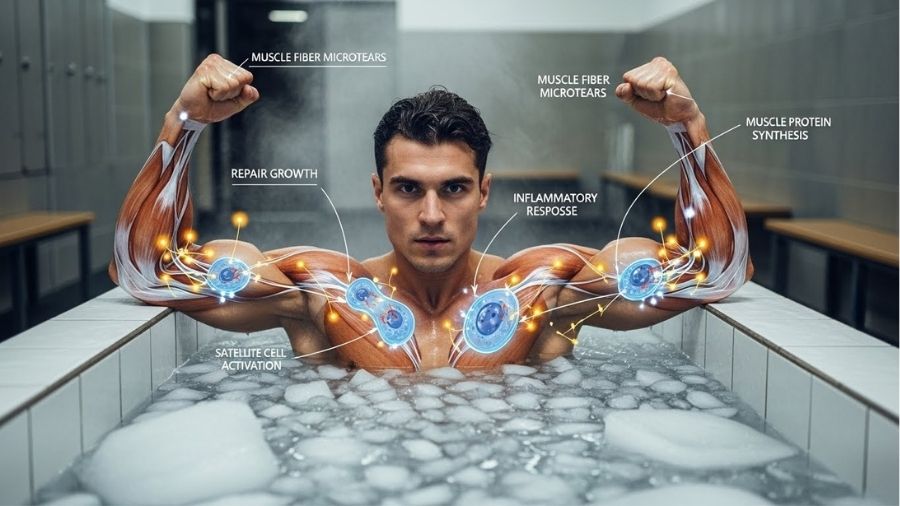
Muscle growth isn’t just about lifting heavy or eating protein, it’s about how your body recovers after each workout. When you train, tiny microtears form in your muscle fibers.
During rest, your body repairs these tears, making the muscle stronger and thicker. That’s the foundation of muscle hypertrophy, growth through stress and recovery.
But here’s what most people overlook: inflammation is part of that process. A moderate inflammatory response tells your body it’s time to rebuild.
Without it, muscles can’t adapt as efficiently. So when we cool that response too quickly, such as through immediate cold therapy, we may be cutting off part of that healing message.
Now let’s look at how ice baths, one of the most popular recovery tools, interact with that delicate balance.
Do Ice Baths Reduce Muscle Growth? What Science Says
Cold immersion works by constricting blood vessels and reducing inflammation. That’s why it feels relieving after an intense session.
But several studies suggest this benefit might come with a trade-off: cold exposure can temporarily reduce protein synthesis, the very process that builds new muscle tissue.
Still, this doesn’t mean ice baths erase your gains. Research in the Journal of Physiology found that while post-strength training ice baths reduced some inflammation, they didn’t completely stop hypertrophy. The effect depends on when and how often you use them.
The takeaway? Ice baths can enhance short-term recovery, less soreness, faster movement, but when used immediately after every strength session, they might slightly blunt long-term growth signals. The key lies in timing and moderation.
“Cold-water immersion may blunt hypertrophy when used post-strength training but can enhance recovery in high-frequency training contexts.” (Frontiers in Physiology)
When And How To Use Ice Baths Without Hindering Muscle Growth

Every recovery tool has a sweet spot, and with ice baths, it’s all about how, when, and why you use them. Used wisely, they can support both recovery and overall wellness. Misused, they can slow progress. Let’s break down the practical steps.
1. Time It Right – Avoid Immediately Post-Workout
Jumping straight into icy water right after lifting may not be ideal. Why? Because your body needs time to activate anabolic signals, the biological green light for muscle repair.
Waiting at least 2–4 hours after strength training allows that process to begin naturally before introducing cold. Read my post on ice bath before or after workout for more a more detailed answer.
If your goal is endurance or quick recovery for back-to-back sessions, immediate immersion can still help. But for muscle growth, let your body’s natural recovery rhythm start first. This timing ensures ice baths support your wellness rather than hinder it.
2. Limit Duration to 10–15 Minutes
More isn’t always better when it comes to cold. Prolonged exposure can overcool muscles, reducing their ability to repair effectively. The optimal ice bath duration? Around 10–15 minutes at 10–15°C (50–59°F).
Short sessions offer all the anti-inflammatory benefits without overstressing your system. Think of it as mindful recovery, enough chill to calm inflammation, but not so much that it disrupts your growth signals.
Also Read: How Cold Should An Ice Bath Be?
3. Use Cold Therapy Strategically (Not Daily)
Daily ice baths may sound disciplined, but they can desensitize your muscles’ natural adaptive responses. For balanced recovery, use them 2–3 times per week after the most intense workouts.
Your body needs a little inflammation to grow. By giving it space to experience that mild stress between sessions, you allow full adaptation while still reaping the calming effects of cold therapy on heavy training days.
4. Combine with Active Recovery
A mindful recovery plan goes beyond ice baths. Pair cold therapy with gentle movement, like yoga, stretching, or a short walk. These activities promote circulation and support joint mobility, two factors that amplify healing.
Cold constricts blood flow, while light movement restores it. Together, they help remove metabolic waste from muscles while maintaining elasticity. You’ll notice less stiffness and a smoother transition between training days.
5. Focus on Nutrition and Sleep
Muscle growth happens during rest, not during the workout. Prioritize protein-rich meals, hydration, and deep sleep, these are your real muscle builders. Ice baths simply aid the recovery process; they don’t replace nutrition or rest.
If your sleep is fragmented or your diet lacks balance, even the most strategic ice bath won’t deliver lasting results. Recovery is a system, and every part, food, rest, mindset, must align for optimal growth.
6. Listen to Your Body’s Feedback
Your body is the best recovery coach you’ll ever have. If you notice stiffness, fatigue, or slower progress after frequent cold sessions, scale back. Cold therapy should refresh you, not drain your energy or dull your training results.
Each person’s response varies. Factors like genetics, training load, and stress levels influence how much recovery your muscles need. Adjust the frequency of your ice baths based on how you feel, not just habit.
7. Alternate With Heat Therapy
Warmth can be just as powerful for recovery. Alternating between hot and cold, a technique known as contrast therapy, improves circulation, flushes out metabolic waste, and promotes muscle flexibility.
Try pairing an ice bath session with a brief warm shower or sauna afterward. The heat opens blood vessels, while the cold reduces inflammation. This balance supports full-body recovery and improves resilience over time.
8. Tailor to Training Goals
Every athlete has different needs. If your main focus is performance and endurance, ice baths after intense sessions can keep you consistent and reduce fatigue. But if your goal is maximal muscle growth, reserve ice baths for occasional use after the hardest days.
Your recovery method should match your goal, not the latest trend. Building awareness around what your body needs helps you train smarter, not harder.
Common Myths About Ice Baths And Muscle Loss

There’s no shortage of misconceptions about cold therapy. Let’s clear up a few that might be holding you back from a balanced approach.
Myth 1 – “Cold kills muscle gains instantly”
This belief comes from misinterpreting early research. While cold exposure can temporarily reduce protein synthesis, it doesn’t “kill” gains. Over time, your body adapts and finds balance.
Short-term recovery doesn’t equal long-term loss. When used mindfully, ice baths support your performance and prevent overtraining, both essential for sustainable muscle growth.
Myth 2 – “Ice baths are only for elite athletes”
Ice baths are accessible to everyone, not just professionals. Whether you’re a weekend lifter or training for a marathon, recovery matters. The benefits of reduced soreness, improved circulation, and relaxation apply to all levels.
You don’t need fancy equipment, even a tub filled with water and ice packs can create the same effect. The key is awareness, not extravagance.
Myth 3 – “Feeling less sore means losing gains”
Soreness is often mistaken as proof of a great workout, but it’s not a reliable measure of progress. Feeling less sore after an ice bath simply means reduced inflammation, not reduced growth.
Progress is about consistency and recovery quality, not soreness levels. Use comfort as a guide, not a gauge of success.
Also Read: Do Ice Baths Reduce Muscle Growth?
Holistic Recovery – Finding The Right Balance
The most effective recovery plan isn’t extreme, it’s balanced. True strength develops when you give your body the time, nourishment, and rest it deserves. Ice baths are just one piece of the puzzle.
Pairing cold therapy with mindful movement, breathwork, and stress reduction builds resilience on every level, physical, emotional, and mental. This is where wellness and recovery merge beautifully.
“True recovery isn’t about extremes, it’s about giving your body space to adapt and grow stronger.”
If you treat recovery as self-care rather than reaction, every workout becomes more productive and sustainable.
Final Thoughts – Cooling Down With Clarity
In the end, ice baths don’t destroy muscle growth, they simply need to be used wisely. Timing, intention, and balance determine their effect on your progress.
When paired with proper rest, nutrition, and mindful recovery, cold therapy can become a powerful ally for both body and mind.
Let your approach to recovery mirror your training philosophy, steady, intentional, and grounded. That’s where real strength grows, not just in your muscles, but in how you care for the body that carries you through every challenge.
Sources
- Llion A Roberts, et al. (2015). Post-exercise cold water immersion attenuates acute anabolic signalling and long-term adaptations in muscle to strength training
https://physoc.onlinelibrary.wiley.com/doi/10.1113/JP270570
- Aaron C. Petersen and Jackson J. Fyfe (2021). Post-exercise Cold Water Immersion Effects on Physiological Adaptations to Resistance Training and the Underlying Mechanisms in Skeletal Muscle: A Narrative Review





Add your first comment to this post