

How Does Yoga Reduce Stress? Guide To Mind-Body Balance!


Last Updated on August 23, 2026
Stress can feel like an invisible weight that lingers no matter how much you try to shake it off. Headaches, restless nights, or that tightness in your chest, they’re all signs of a body on edge.
So, how does yoga reduce stress when nothing else seems to quiet the mind? The answer lies in the way yoga gently rebalances both the nervous system and your emotional state.
As a registered nurse and wellness and recovery consultant, I’ve seen countless people discover yoga as more than exercise. It’s a practice that trains the body to release tension, restores breath to its natural rhythm, and helps the mind return to calm clarity.
In this article, I’ll walk you through how yoga works scientifically, physically, and emotionally to help you feel grounded again.
| How Does Yoga Reduce Stress? Yoga reduces stress by lowering cortisol, calming the nervous system, and promoting mindfulness through breath, movement, and relaxation techniques. |
The Science Behind Stress And Yoga
Stress is more than a bad mood, it’s your body shifting into fight-or-flight mode, driven by surges of cortisol and adrenaline. This response once kept humans alive in dangerous environments, but constant activation now leaves many of us anxious, tense, and drained.
So where does yoga come in? It activates the parasympathetic nervous system, sometimes called the “rest-and-digest” mode. This is the opposite of fight-or-flight, helping heart rate slow down, digestion improve, and muscles release built-up tension.
What does research say? Studies from Harvard and the NIH show that regular yoga practice can lower cortisol levels and improve resilience against daily stressors.
In simple terms, yoga gives your body permission to stop bracing for danger and start healing. Doesn’t that sound like exactly what your system has been waiting for?
Mind-Body Connection In Stress Relief

The heart of yoga isn’t just stretching, it’s the relationship between breath, awareness, and movement. That connection is what makes stress dissolve instead of linger.
Breathing and Nervous System Reset
Think about the last time you held your breath under pressure. Stress naturally shortens your breathing.
Practices like diaphragmatic breathing or alternate nostril breathing restore deep, rhythmic breaths that calm the vagus nerve. When the vagus nerve signals safety, your body eases out of high alert.
Want proof it works? Try closing your eyes and taking five slow belly breaths right now. Notice how your shoulders start to drop and your heart rate softens. That’s yoga’s nervous system reset in real time.
Mindfulness Through Movement
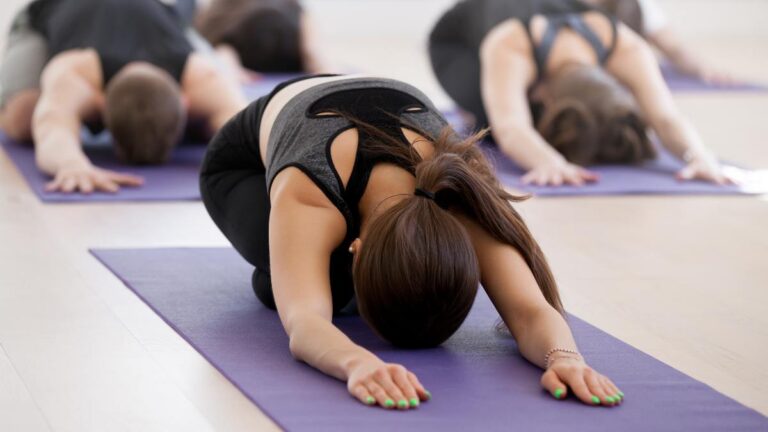
Movement in yoga isn’t about pushing harder, it’s about focusing attention on the present moment. When you tune into how your body feels in Child’s Pose or align carefully in Mountain Pose, the racing loop of anxious thoughts loses its grip.
What this really means is that yoga turns physical poses into anchors for mindfulness. Instead of spinning in stress-driven thoughts, you give your brain a calming focal point. And over time, this skill follows you off the mat, helping you stay steady in daily life.
Physical Benefits Of Yoga For Stress
Stress doesn’t just live in your head, it settles in your body too. Tight shoulders, clenched jaws, and restless nights are all ways your body tries to carry the load. Yoga works on these physical layers of stress in powerful ways.
- Cortisol and Hormonal Regulation
When cortisol stays high for too long, you feel wired but tired. Research shows that consistent yoga practice lowers cortisol, giving your body a break from being constantly on guard. That hormonal reset helps you feel calmer during the day and improves recovery at night.
- Muscle Relaxation and Tension Release
Notice how stress often makes your neck or back ache? Yoga postures gently stretch and release those areas. By opening tight hips or lengthening the spine, you’re teaching muscles to soften instead of holding onto tension. This physical release translates into mental relief too.
- Improved Sleep and Recovery
Ever lie awake with your mind racing? Stress keeps the nervous system on high alert, which disrupts sleep. Studies link yoga with deeper, more restorative rest. A short bedtime routine with gentle poses can help the body shift gears and prepare for true recovery.
Read Also: Yoga For Anxiety and Stress Relief
Best Yoga Practices For Stress Relief

Not all yoga styles feel the same. When stress is the problem, it’s the calming, restorative side of yoga that works best. Think soft movements, supportive postures, and intentional breathing rather than intense flows.
Gentle & Restorative Yoga Poses
Sometimes the simplest postures are the most healing. Child’s Pose, Legs-Up-The-Wall, and Corpse Pose are go-to shapes that calm the nervous system. These poses create a sense of safety and ease that stress can’t compete with.
- Child’s Pose: quiets the mind and relieves tension in the back.
- Legs-Up-The-Wall: reduces swelling and calms circulation.
- Corpse Pose: teaches the body how to fully let go.
Breathing Practices for Calm
Breath is yoga’s secret weapon against stress. Box breathing (inhale for 4, hold for 4, exhale for 4, hold for 4) or alternate nostril breathing are simple techniques you can use anywhere.
They anchor the mind and slow down the stress response almost instantly.
Yoga Nidra and Deep Relaxation
Yoga Nidra, often called “yogic sleep,” is a guided meditation that takes you into a deeply restful state. Studies suggest it can lower blood pressure and reduce anxiety symptoms.
Think of it as pressing a reset button for both body and mind. Just 20 minutes can feel like hours of restorative rest.
Read Also: Restorative Yoga Poses For Relaxation
Emotional And Mental Shifts Through Yoga
Stress isn’t only physical, it twists the way you think and feel. Yoga helps untangle that knot by gently shifting your emotional state toward balance.
When you practice regularly, you start noticing fewer spikes of anxiety and a smoother ability to handle daily ups and downs. That’s because yoga boosts serotonin and endorphins, natural mood stabilizers that counteract stress hormones.
- Emotional Regulation and Resilience
Ever find yourself snapping under pressure? Yoga teaches you to pause. That pause gives your brain time to reframe and respond with clarity. Over time, you build resilience, the ability to bend without breaking.
- Self-Compassion and Inner Calm
Stress often makes us harsh with ourselves. On the mat, yoga encourages kindness toward your body and thoughts. That habit extends beyond class, creating a softer, more compassionate inner voice. And when you shift your inner dialogue, stress loses much of its grip.
For youngsters, I’ve written a guide on yoga for teens emotional and mental health that you might want to read.
Also Read: Can Yoga Keep You Young?
Creating A Stress-Relief Yoga Routine
Knowing how yoga works is one thing, but weaving it into daily life is where the change happens. Stress relief doesn’t need hours of practice, even 10 to 20 minutes can reset your system.
Time and Consistency Matter
Short, consistent practices often work better than long, irregular ones. Think of it like brushing your teeth: small daily care prevents bigger issues later.
A quick morning stretch or evening wind-down sequence can do wonders.
Integrating Mindfulness Beyond the Mat
Yoga doesn’t end when you roll up the mat. Carrying breath awareness into stressful moments at work or slowing down your posture while standing in line are simple ways to keep stress at bay.
Here’s a simple routine you can try:
- Morning: 5 minutes of breathing + gentle stretches.
- Midday: 2 minutes of seated posture check and mindful breathing.
- Evening: 10 minutes of restorative poses before bed.
Even these small shifts add up, training your body to find calm no matter what the day throws your way.
Read Also: 20-Minute Morning Yoga Flow For Energy
Conclusion – How Does Yoga Reduce Stress?
Stress may weave its way into modern life, but it doesn’t have to dictate how you feel each day. Through a balance of mindful breathing, gentle movement, and restorative stillness, yoga helps the body regulate stress hormones and creates a steady rhythm of calm.
Over time, the practice builds not only physical release but also emotional clarity and resilience. Even a short daily routine can shift how you carry tension, offering an anchor you can return to whenever life feels heavy.
Yoga becomes more than exercise, it’s a reminder that calm is always within reach. Let yourself lean into that truth, one breath and one pose at a time.
Sources
- Exercising to relax – Article (2020)
https://www.health.harvard.edu/staying-healthy/exercising-to-relax
- J Thirthalli, et al. (2013). Cortisol and antidepressant effects of yoga
https://pmc.ncbi.nlm.nih.gov/articles/PMC3768222
- Alina Schleinzer, et al. (2024). Effects of yoga on stress in stressed adults: a systematic review and meta-analysis
https://www.frontiersin.org/journals/psychiatry/articles/10.3389/fpsyt.2024.1437902/full
- Krima Tanna and Subhash Khatri (2024). Effect of Yoga Nidra on Perceived Stress in Individuals with High Blood Pressure: A Quasi-experimental Study






Add your first comment to this post