

Yoga For Frozen Shoulder – Poses To Restore Mobility!


Last Updated on September 5, 2025
Shoulder stiffness that won’t ease up? Frozen shoulder can make simple tasks, like lifting a cup or reaching for your jacket, feel like a battle. The pain is sharp, but the loss of mobility is often what weighs on daily life the most.
That’s where yoga for frozen shoulder comes in. Not as a quick fix, but as a mindful practice to gently restore movement, reduce tension, and bring a sense of calm back to your body.
As a registered nurse and wellness and recovery consultant, I’ve seen how consistent, gentle yoga can complement medical care and support recovery.
In this guide, we’ll explore safe poses, mindful breathing, and small lifestyle shifts that can help your shoulders find ease again.
| What Is The Best Yoga For Frozen Shoulder? The best yoga for frozen shoulder includes gentle poses like Child’s Pose, Thread the Needle, and supported Cow-Face Arms. These stretches help ease stiffness, improve shoulder mobility, and reduce pain without strain. |
Understanding Frozen Shoulder

Frozen shoulder, also called adhesive capsulitis, is more than just discomfort. It’s a condition where the capsule around your shoulder joint thickens and tightens, creating stiffness and pain that can last for months, or sometimes longer.
What does it feel like? Most people describe a dull ache that sharpens with movement. The hallmark sign is limited range of motion: reaching overhead, behind your back, or to the side becomes difficult.
So why does this happen? Sometimes it follows injury, surgery, or prolonged immobility. Other times, it develops with no clear reason at all. What’s clear is the frustration, it interferes with sleep, work, and simple joys like dressing or lifting.
The emotional impact matters too. Constant restriction can leave you tense, drained, and even anxious about movement. That’s why finding gentle, sustainable ways to restore mobility is so important.
| Can frozen shoulder heal? Yes, but recovery is often slow. Yoga offers a safe way to move through the healing process with patience. |
How Yoga Helps With Frozen Shoulder
When your shoulder feels locked, the natural instinct is often to avoid movement. The problem? Immobility makes the capsule even tighter.
That’s where yoga can shift the cycle. Gentle postures promote blood flow, joint lubrication, and gradual mobility, which help release tension without forcing movement.
Unlike aggressive stretching, yoga emphasizes mindful awareness. You’re encouraged to pause, breathe, and move only within pain-free limits. This slower pace allows the muscles and connective tissues around the shoulder to relax rather than resist.
There’s also a holistic benefit. Frozen shoulder isn’t just a physical limitation, it affects sleep, mood, and posture. A steady yoga practice addresses the whole picture by easing stress, calming the nervous system, and encouraging healthier alignment.
So why yoga over regular stretching? Because yoga isn’t only about mobility, it’s about teaching the body and mind to move together safely, making recovery sustainable.
Read Also: Yoga For Emotional Balance
Can Yoga Fix A Frozen Shoulder? Scientific Insights

Is there science behind yoga’s benefits for stiff shoulders? Absolutely. Studies on therapeutic yoga highlight improvements in joint range of motion, pain reduction, and functional movement in people with musculoskeletal conditions.
One study showed that patients practicing gentle yoga twice a week experienced better mobility and less discomfort compared to standard exercise programs.
Researchers noted the role of slow breathing and relaxation in reducing muscle guarding, the unconscious tightening that worsens stiffness.
From my perspective as a nurse, this matters. Pain often triggers protective tension, but yoga’s integration of breath with movement interrupts that cycle. Over time, the nervous system learns to release rather than brace.
Quick takeaway: Yoga supports both the physical and emotional recovery process, which is why it can be such a valuable ally in frozen shoulder rehabilitation.
Gentle Yoga Poses For Frozen Shoulder

When mobility feels limited, jumping into intense stretches can do more harm than good. The goal with yoga for frozen shoulder is not to push through pain but to gently coax the shoulder into freer movement.
Props like straps, bolsters, or a supportive wall make this practice accessible, even when your range of motion is restricted
Think of each pose as an invitation, not a demand. Breathe steadily, pause when you feel resistance, and focus on small improvements over time. These movements may look simple, but their impact compounds when practiced consistently.
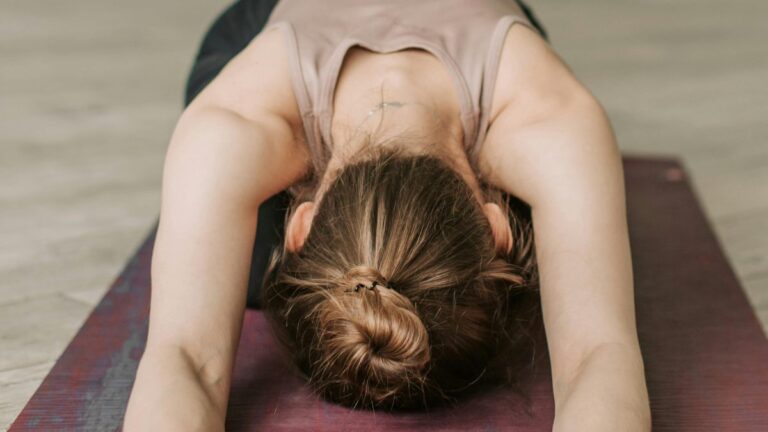
1. Supported Child’s Pose
This pose offers a safe, restorative way to create space across the shoulders and upper back. Place a bolster or stack of pillows in front of you and kneel down, allowing your torso to rest fully on the support.
Extend your arms forward with palms down, or if that feels too intense, bend the elbows and rest your forearms on the floor.
The gentle forward fold encourages the shoulder blades to release and the nervous system to calm. If reaching overhead feels painful, widen your arms or keep them bent. Stay here for 1–2 minutes, breathing slowly into your back ribs.
Why it helps: Supported Child’s Pose relieves tension, reduces guarding in the shoulder muscles, and creates a safe environment for mobility to return gradually.
2. Thread the Needle Pose
Thread the Needle provides a deep yet supported stretch for the outer shoulder and upper back. Begin on all fours with wrists under shoulders and knees under hips.
Slowly slide your right arm underneath your left, palm facing up, and rest your right shoulder and cheek on the mat. Extend your left arm forward or keep it bent for balance.
This pose encourages rotation of the thoracic spine and opens the posterior shoulder capsule, which is often restricted in frozen shoulder. Use a folded blanket under your shoulder or head if the floor feels too far away.
Hold for 5–8 breaths before gently switching sides. Move carefully to avoid sharp pain.
Why it helps: It gently increases flexibility while improving circulation in the shoulder joint, making movement less restricted over time.
Read Also: Yoga For Knee Pain
3. Cow-Face Arms (with Strap)
Cow-Face Arms is one of the best yoga stretches for restoring shoulder mobility, but for frozen shoulder, a strap is essential.
Sit tall in a chair or on the floor. Hold a strap in your right hand and extend it overhead. Bend your right elbow so the strap hangs down your back. Reach your left hand behind to grasp the strap at a lower point.
If reaching feels impossible, don’t force it. Simply walk your lower hand up the strap to the level that feels accessible today. Hold for several breaths, keeping your chest lifted and neck relaxed.
Repeat on the other side with equal care.
Why it helps: This pose strengthens mobility in both external and internal rotation of the shoulders, which are often the most limited in frozen shoulder.
4. Seated Side Stretch
Sometimes the shoulders need space before they need stretching. Seated Side Stretch creates length through the ribcage and shoulders while releasing tension that accumulates from protective posture. Sit comfortably in a chair or on the floor.
Place your right hand on the ground (or chair seat) and extend your left arm overhead, leaning gently to the right.
If lifting your arm feels painful, keep your elbow bent or rest your hand on your hip. Breathe into the side body, focusing on opening the space from your waist to your armpit. Switch sides after 5–8 breaths.
Why it helps: This pose encourages gentle lateral mobility, helps relieve compensatory tension, and makes overhead motion more accessible over time.
Safety Considerations Before Starting
Before stepping onto the mat, it’s important to remember that frozen shoulder heals best with patience. Rushing progress can actually set you back. That’s why listening to your body is the first rule of practice.
So when should you pause or skip yoga? If you’re in an acute pain phase, dealing with swelling, or recovering from recent surgery, it’s best to wait until your physician clears movement.
Yoga should never feel like a sharp, stabbing sensation. Gentle discomfort can be normal, but pain is a clear stop sign.
Another consideration is how you move. Fast, jerky motions often trigger the protective guarding response, making the shoulder lock tighter. Instead, move slowly, coordinate breath with action, and keep props nearby for support.
Quick reminder: Always consult a healthcare professional before adding new practices to your recovery plan. Your shoulder deserves safe, intentional care.
Building A Mindful Shoulder Recovery Practice
Healing a frozen shoulder takes consistency more than intensity. Practicing for 10 minutes daily often leads to more progress than an occasional long session. The key is showing up with compassion for yourself, not with force.
A mindful practice blends movement, breath, and awareness. Short sequences of supported poses paired with slow breathing gradually retrain the nervous system to trust movement again.
Journaling your progress can also be powerful, tracking small wins like “I lifted my arm higher today” builds confidence and motivation.
Yoga doesn’t need to stand alone. Pairing your practice with complementary therapies, like heat packs, gentle massage, or physiotherapy, creates a more complete recovery approach.
The question to ask is this: Are you moving with control, calm, and awareness? If the answer is yes, then your practice is working exactly as it should.
Read Also: Yoga For Nervous System Reset
Breathing Practices
Breath may seem secondary when the main issue is stiffness, but it plays a critical role in recovery. Deep diaphragmatic breathing reduces muscle tension by activating the parasympathetic nervous system, your body’s natural relaxation mode.
Try this simple exercise: Sit comfortably, place one hand on your belly, and inhale slowly through your nose, feeling your abdomen rise. Exhale gently through the mouth, allowing the belly to soften. Repeat for 6–8 cycles before beginning your poses.
Pairing breath with movement amplifies results. For example, inhale to prepare, exhale as you move into a pose. This rhythm lowers resistance in tight muscles and makes stretching safer.
Why it matters: Breath bridges body and mind, making your yoga practice more than physical, it becomes a whole-body healing experience.
Lifestyle Support For Shoulder Health

Yoga helps release stiffness, but daily habits often decide how well recovery holds. A frozen shoulder doesn’t exist in isolation, it’s affected by posture, sleep, and stress. Making small adjustments in these areas can complement your practice and keep your progress steady.
Think about how you spend most of your day. Are you at a desk? Do you sleep on one side more than the other? These patterns matter. The goal is to create an environment where your shoulder feels supported instead of strained.
Read Also: How Does Yoga Reduce Stress?
Ergonomics and Posture
Poor desk or phone posture often compounds shoulder tension. Keeping screens at eye level, elbows close to the body, and shoulders relaxed prevents unnecessary strain.
If you sit long hours, take short mobility breaks. Even standing and rolling the shoulders back for a minute can counteract stiffness.
At night, sleeping with a supportive pillow that aligns your neck and shoulders can prevent aggravation. If lying on your affected side is uncomfortable, use a pillow under the arm to keep the shoulder joint more open.
Takeaway: Posture isn’t about perfection, it’s about small adjustments that reduce pressure and allow healing.
Gentle Daily Mobility
Beyond yoga, adding simple, functional movements throughout the day makes recovery more sustainable.
Try wall slides, where you stand with your back against the wall and slowly slide your arms upward as far as they go without pain. Arm circles and pendulum swings are also safe, natural ways to maintain circulation.
These movements don’t need to be long or complicated. A few minutes sprinkled across your day can be as valuable as a longer yoga session.
Why it works: Gentle repetition builds trust between the joint and the nervous system, reducing the fear of movement that often comes with frozen shoulder.
Stress Management
Shoulder pain isn’t just physical, it’s tied to stress more than many realize. High stress levels cause muscles to tighten, making the shoulder capsule feel even more restricted.
Mindful practices like meditation, restorative yoga, or even a short breathing exercise can help break this cycle.
Sometimes relaxation is as therapeutic as movement. Try lying down with a bolster under your knees, arms at your sides, and focusing only on slow breathing for 5 minutes. This simple reset reduces overall body tension, giving your shoulder space to heal.
Remember this: Recovery thrives when the whole system is calm, not just the joint itself.
Final Thoughts
Living with frozen shoulder can feel limiting, but it doesn’t have to define your daily life. Gentle yoga offers a way to move through stiffness without force, reconnecting you with your body’s natural rhythm.
Progress often comes slowly, yet with steady practice, the shifts are real, i.e., less tension, more mobility, and a calmer mind.
Think of each pose and breath as part of your healing journey, not just an exercise. Small moments of release add up, restoring both comfort and confidence.
As your shoulder softens, so does the sense of heaviness that comes with it. Recovery is possible, and each mindful step brings you closer to ease.
Sources
- B. Pravalika, et al. (2022). Effect of Yoga on musculoskeletal pain and discomfort, perceived stress, and quality of sleep in industrial workers: Study protocol for a randomized controlled trial
https://www.sciencedirect.com/science/article/abs/pii/S2212958822000945
- Małgorzata Grabara and Janusz Szopa (2015). Effects of hatha yoga exercises on spine flexibility in women over 50 years old
https://www.jstage.jst.go.jp/article/jpts/27/2/27_jpts-2014-427/_article
- Pathan, et al. (2023). Effect of slow breathing exercise and progressive muscle relaxation technique in the individual with essential hypertension: A randomized controlled trial




Add your first comment to this post