

What To Do After An Ice Bath? A Step-By-step Guide!


Last Updated on December 17, 2025
The moment you step out of an ice bath, there’s a strange mix of calm and intensity running through your body. Your skin tingles, your breath steadies, and a quiet question rises — what should I do next?
That moment matters more than most people realize. Whether your goal is muscle recovery, mental clarity, or immune resilience, understanding what to do after an ice bath directly influences how well your body restores equilibrium.
As a registered nurse and wellness consultant, I’ve seen that recovery isn’t just about the cold — it’s about the care that follows.
Post-ice bath rituals restore warmth, circulation, and peace to both body and mind. Let’s walk through the mindful steps that turn your cold plunge into a full wellness and recovery experience.
What Should You Do After An Ice Bath?
After an ice bath, focus on gradually warming your body through gentle movement, hydration, and warm fluids. Avoid immediate intense exercise. Take 10–15 minutes to rest, breathe deeply, and allow your circulation to return to normal before any activity.
The Purpose Of Post-Ice Bath Recovery

Cold plunges challenge your system in powerful ways — but it’s the recovery that locks in the benefits. Your blood vessels constrict in the ice bath to preserve core temperature. Once you step out, they dilate again, allowing warm, oxygen-rich blood to flood your muscles.
That shift is where healing begins. Without mindful post-care, you might miss the full reward of the cold exposure — or worse, feel dizzy, drained, or sluggish afterward. Proper rewarming helps restore balance to your nervous system, regulate heart rate, and support cellular repair.
Think of post-ice bath recovery as the bridge between stress and rejuvenation. It’s where your body transitions from resilience training to restoration — and your wellness practice deepens.
Read Also: Can I Take Hot Shower After Ice Bath?
Step-By-Step Guide — What To Do After An Ice Bath
Your post-ice bath routine doesn’t need to be complicated, but it should be intentional. Each step helps your body and mind find balance again.
Let’s break it down.
Transition Slowly Out of the Ice Bath
The cold can leave your circulation temporarily restricted, so moving too quickly can cause lightheadedness or dizziness. Step out carefully, keeping your body supported and grounded.
Pat yourself dry with a towel — not harshly, but gently. Rubbing too hard can irritate cold-sensitive skin. Wrap yourself in a soft towel or robe right away to preserve warmth while your body adjusts.
This slow transition gives your cardiovascular system time to stabilize. It’s a moment to pause, breathe, and honor what your body just accomplished.
Rewarm Gradually, Not Immediately
It’s tempting to jump into a hot shower the second you’re out of the cold, but sudden heat can shock your system. The goal is gradual temperature recovery — not instant rewarming.
Wrap yourself in warm layers or a cozy blanket instead. Allow your body’s internal heat to rise naturally for 10–15 minutes. This slow approach helps your circulation normalize and reduces the risk of post-cold fatigue.
Once your skin color returns to normal and you stop shivering, a mildly warm shower can enhance blood flow and comfort without stressing your body.
Gentle Movement to Boost Circulation
When your body starts warming, movement helps restore full circulation and oxygen delivery to your muscles. Think light yoga stretches, slow walking, or simple arm swings. Nothing strenuous — just motion that invites your blood to flow freely again.
This gentle phase is where recovery deepens. You’re helping your body shift from constriction to balance, signaling your nervous system that it’s safe to relax.
Athletes often notice less stiffness the next day when they include this step. Small movement equals big recovery gains.
Focus on Deep Breathing and Relaxation
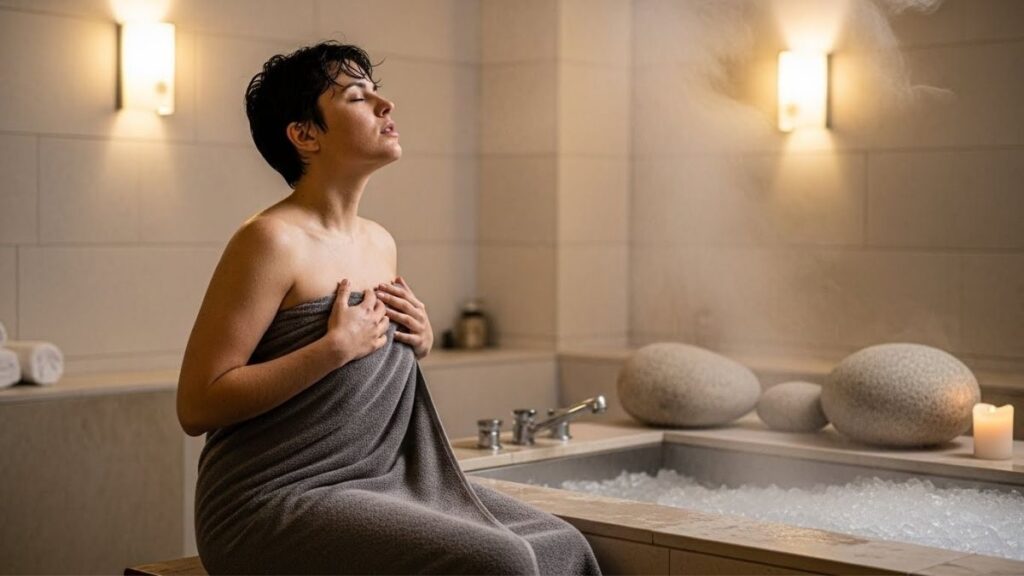
Cold exposure activates your sympathetic nervous system — the “fight or flight” response. To balance that, you need deep, mindful breathing afterward.
Try slow, diaphragmatic breaths. Inhale deeply for four counts, exhale for six. Feel your body soften with each breath.
This isn’t just relaxation — it’s physiology. Deep breathing lowers cortisol, stabilizes your heart rate, and invites your parasympathetic system (your rest-and-digest mode) to take over.
It’s also an emotional reset. Let your mind settle into stillness. You’ve just endured intensity — now, allow calm to take its place.
Hydrate and Replenish Electrolytes
Cold immersion increases cold diuresis, meaning your body flushes out fluids faster than usual. Without replenishment, dehydration can sneak up on you.
Rehydrate with filtered water, coconut water, or an electrolyte-rich drink. Herbal teas are an excellent choice — they add warmth while replenishing minerals naturally.
You don’t need fancy supplements. A pinch of sea salt in warm lemon water can also help restore sodium balance and prevent post-ice bath fatigue. Keep sipping slowly until your thirst fades and your energy returns.
Nourish with a Balanced Snack or Meal
After an ice bath, your metabolism stays slightly elevated as your body works to restore heat. This is the perfect time to nourish your recovery.
A mix of protein and carbohydrates helps repair muscle tissue and replenish glycogen stores. Examples: Greek yogurt with berries, oatmeal with nut butter, or eggs with avocado toast.
Avoid heavy, greasy meals — they slow digestion and can make you feel sluggish. Think clean, warm, and balanced. Food after an ice bath isn’t just fuel; it’s part of your restoration ritual.
Warm Shower or Sauna — When It’s Appropriate

Many people wonder whether they can take a sauna or warm shower immediately after a cold plunge. The key is timing. Wait about 20–30 minutes after your ice bath before adding heat.
This gives your body time to recalibrate its internal temperature naturally. Then, gentle warmth — whether from a sauna or warm shower — can help open blood vessels, enhance circulation, and ease lingering tension.
If you enjoy contrast therapy, alternating short heat and cold cycles can be beneficial, but listen to your body. The goal is recovery, not endurance.
Read Also: Should You Ice Bath Or Sauna First?
Rest and Reflect
Once you’ve rehydrated and rewarmed, take time to simply rest. Lay down, close your eyes, or sit quietly for a few minutes. Let your body integrate the experience.
This pause supports nervous system recovery — it allows your stress response to fade while your parasympathetic system deepens its hold. Some people find journaling about sensations or emotions that surfaced during the ice bath helpful.
What you’ll notice is that this quiet reflection often brings unexpected calm and mental clarity — the deeper gift of cold exposure.
Dress Comfortably and Stay Warm
After rewarming internally, it’s still important to keep your external temperature steady. Choose soft, breathable layers that trap heat — think cotton, fleece, or wool.
Avoid synthetic materials that don’t allow skin to breathe. Socks, a hoodie, or a cozy blanket help maintain consistent warmth.
Temperature swings can make recovery harder, so maintaining warmth keeps your energy steady and your muscles relaxed as your body completes the healing cycle.
Avoid Alcohol or Caffeine Immediately After
Both alcohol and caffeine act as diuretics, meaning they encourage your body to lose more fluid — exactly what you don’t need post-ice bath.
Alcohol also dilates blood vessels, which can interfere with your body’s rewarming process. Caffeine, on the other hand, may elevate your heart rate unnecessarily.
Instead, choose hydrating, soothing options: herbal tea, warm lemon water, or bone broth. Your body needs gentle support, not stimulation, right after cold therapy.
How Long Should You Rest After An Ice Bath
How long you rest afterward matters as much as the ice bath itself. The body goes through a series of rapid physiological changes — from constriction to dilation, and from alertness to calm. Pushing too soon into intense activity can interrupt that repair cycle.
Ideally, give yourself 15–30 minutes of stillness before resuming your day. For athletes, that window allows muscle fibers to recover before the next workout. For anyone using ice baths for wellness, it’s a moment to let energy settle and realign.
Think of this rest as integration time — where your body and mind catch up to the shift you’ve just created.
How rest enhances recovery
Rest isn’t laziness; it’s where healing begins. During that quiet window, your nervous system transitions from fight-or-flight to rest-and-digest. Blood flow normalizes, inflammation reduces, and oxygen delivery improves.
Skipping rest often leads to feeling drained or irritable later in the day — signs your body didn’t complete its recovery cycle. Sitting in warmth, practicing slow breathing, or journaling sensations can help you stay present while your body restores balance.
When you give rest its rightful place in recovery, you amplify every benefit of the ice bath — from mood regulation to faster muscle repair.
Can you nap after an ice bath?
Absolutely, as long as your body temperature is stable. A short nap after rewarming can deepen recovery, especially if the ice bath was intense.
Sleep enhances growth hormone release and reduces residual stress hormones like cortisol. Keep the nap brief — 20–30 minutes — to prevent grogginess.
If you prefer to stay awake, lying quietly in a warm space offers the same grounding benefits. Either way, the goal remains the same: give your body time to process and reset.
Common Mistakes To Avoid After An Ice Bath
Even the most well-intentioned recovery routines can lose their impact with a few small missteps. Understanding what not to do after an ice bath is just as important as knowing what to do.
Many people rush to warm up too quickly or neglect hydration, undermining the balance their body just achieved. Let’s look at the common pitfalls — and how to avoid them.
Jumping Straight into a Hot Shower
Sudden heat right after cold immersion can cause your blood pressure to drop, leaving you dizzy or nauseous. The body needs time to transition.
Instead of rushing to the shower, wrap yourself in warm layers for 10–15 minutes. Once your skin feels warm and your shivering stops, ease into a mild shower — not scorching water.
This gradual process allows blood vessels to expand safely, avoiding the rebound stress that can undo your recovery progress.
Exercising Immediately After
It might seem like a good idea to “warm up” with a quick workout, but this can backfire. After an ice bath, your muscles are in a relaxed, less responsive state. Pushing them too soon increases the risk of strain or fatigue.
Wait at least 30–60 minutes before any moderate exercise. During that time, focus on rehydrating and rewarming.
Your body performs best when fully recovered — not when it’s rushing to prove resilience.
Not Eating or Drinking Enough
Cold exposure increases your metabolic rate, which means your body burns through more energy and fluids. Skipping nourishment afterward can delay muscle recovery and leave you lightheaded.
Pair hydration with a balanced snack — something warm, easy to digest, and rich in electrolytes. If you’re not hungry, sip on herbal tea or bone broth.
Your body has just done significant work to regulate itself. Support it with mindful refueling, not neglect.
Overusing Ice Baths
Ice baths are powerful, but daily use isn’t necessary for most people. Too much cold exposure can suppress inflammation excessively, interfering with natural muscle adaptation and immune responses.
Aim for two to four sessions per week, depending on your fitness level and recovery goals. The key is consistency, not frequency.
Remember: rest days are part of recovery too. Balance keeps the benefits sustainable.
Read Also: How Many Ice Baths A Week?
Mindful Recovery Practices To Enhance Results
The moments after your ice bath can be more than just physical recovery — they can become part of your mindfulness practice. The calm that follows cold exposure is fertile ground for reflection, grounding, and intentional self-care.
If you treat your post-ice bath time as a mindful ritual, you transform a recovery habit into a wellness anchor.
Combine Cold Exposure with Meditation
Meditation right after an ice bath enhances emotional clarity and resilience. Your mind is more receptive and focused once the initial adrenaline fades.
Sit or lie down comfortably, close your eyes, and notice the warmth returning to your skin. Observe your breath without changing it. This quiet attention helps anchor the mind and deepen the sense of inner calm that follows cold therapy.
Even five minutes of stillness can reset your mood and bring awareness to subtle shifts in energy and emotion.
Keep a Recovery Journal

Writing after your ice bath can reveal insights about your body’s resilience and emotional state. Note how long it took to rewarm, what sensations stood out, or how your mood shifted.
Over time, these reflections build awareness and help tailor your future sessions. You might notice patterns — such as feeling more grounded when you rest longer or hydrate more deeply.
Recovery journaling isn’t just tracking; it’s mindfulness in motion — a gentle reminder that healing is both physical and reflective.
Try Gentle Yoga or Mobility Work
Once your body feels warm again, light yoga or stretching supports circulation and flexibility. Movements like cat-cow, child’s pose, or forward folds ease tightness without strain.
The goal isn’t performance — it’s flow. Allow your body to move naturally, releasing any lingering tension from the cold exposure.
This mindful movement enhances lymphatic drainage, helps eliminate metabolic waste, and brings balance back to your joints and muscles.
Create a Post-Ice Bath Ritual
A ritual gives structure to recovery. It transforms a simple routine into something meaningful.
Try this simple sequence: towel wrap → herbal tea → slow breathing → short reflection. Each step reinforces warmth, hydration, and mindfulness.
Rituals also signal your body that it’s time to unwind, reducing stress hormones and creating a familiar rhythm of calm after the shock of the cold. Over time, this rhythm becomes an anchor for your overall wellness journey.
Final Thoughts
What you do after an ice bath isn’t just about recovery — it’s about reverence. You’ve asked your body to endure something intense; now, it deserves calm care in return.
Taking time to rewarm, hydrate, and rest transforms cold exposure from a challenge into a mindful ritual of restoration. It’s a small act of compassion toward yourself — one that nurtures balance, resilience, and awareness.
Every post-ice bath moment is a chance to reconnect with your body’s wisdom. And when you treat recovery with the same intention as the plunge itself, that’s where true wellness begins.




Add your first comment to this post